-

·
Black Locust Notecard
Black Locust (Robinia pseudoacacia) This large member of the pea family has spreading, ferny foliage and in late spring produces pendant spikes of fragrant blossoms from which honeybees make a delightful honey. This fast-growing tree can each 80 feet or more, occasionally growing to 120 feet, the trunk being 3-4 feet thick. Its bark matures…
-

·
Bristlecone Pine Notecard
Bristlecone Pine (Pinus longaeva) On the arid, windswept mountaintops of the Great Basin in the western U.S. grows earth’s oldest living inhabitant, the bristlecone pine. The bristlecone pine, named for the long hooked spike on the seeds of the cones, has adjusted to places that no other tree can inhabit, and in these harsh environments…
-

·
Clover Notecard
Clover Clover’s curl of leaf cradles beaded shimmers, catching sky and casting glimmers for faeries to travel by. And still a deeper magic stirs beneath the soil, where clover transforms the breath of sky to food for soil and plant life. Among roots stretching wide and deep, fat nodules cradle nitrogen captured from the wind…
-
·
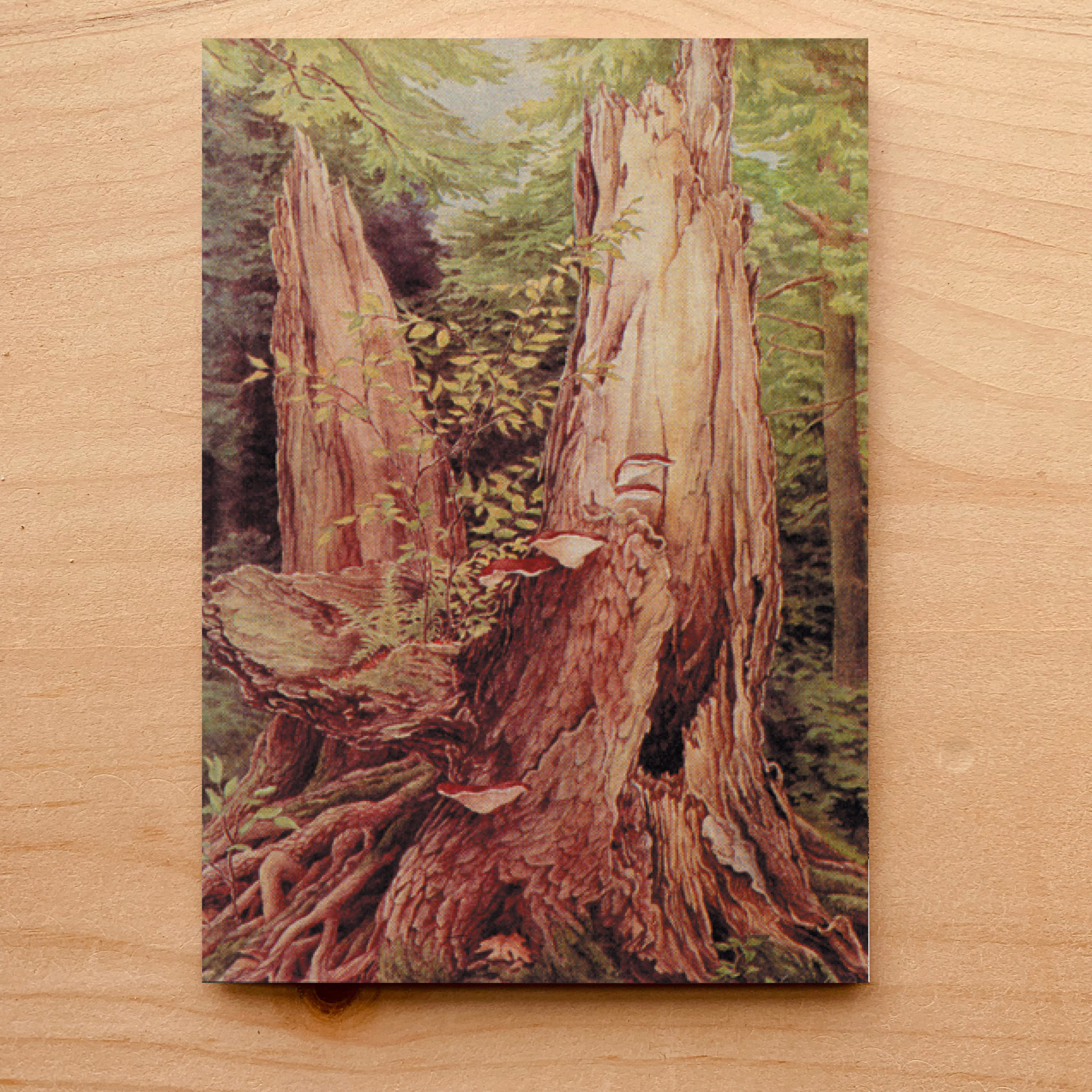
Immortality Notecard
Immortality This hemlock stump standing 12 to 15 feet tall displays the array of life forms that find nurturance in its last transformation. Large rotting stumps are important components for healthy ecosystem interactions. Birch trees, ferns, mosses, fungi, beetles, birds, salamanders and countless insects and organisms gather in the rotting wood to start new generations…
-
·
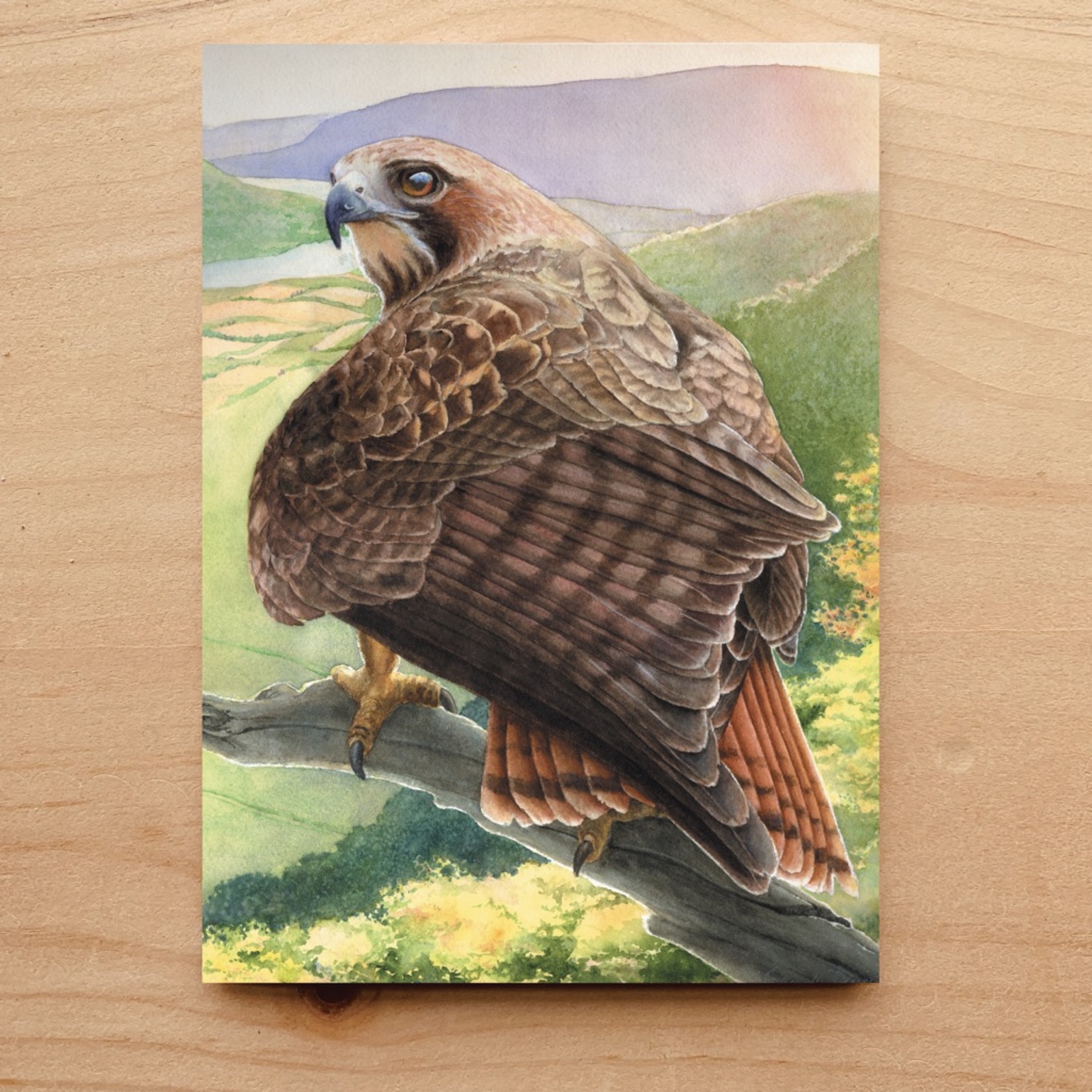
Red-tailed Hawk Notecard
Red-tailed Hawk (Buteo jamaicensis) Red-tailed hawks are one of the most far-ranging and recognizable birds in all of the U.S. and Canada. Belonging to a group called buteos, or soaring hawks, their broad, rounded wings and fan-shaped tails take full advantage of rising warm air currents. Look for them circling overhead on clear, still days,…
-
·
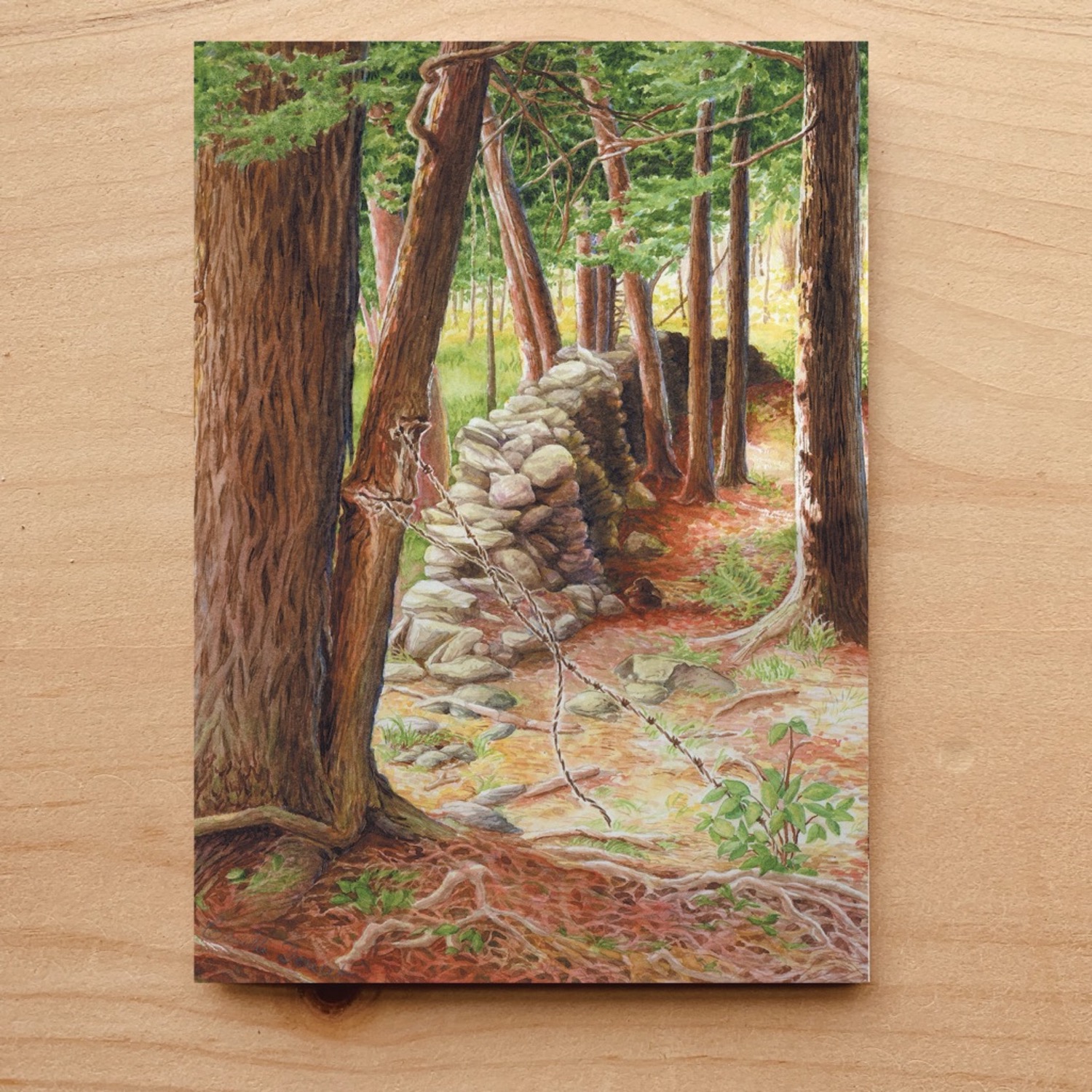
Stone Wall Notecard
Stone Wall An old stone wall deep in the forest – it tells a story about the short lives of people and the eternity of Nature. People came long ago and cut the forest down and made fields and pastures in its place. They cleared all the larger stones from the fields and made walls…
-

·
White Oak Notecard
White Oak (Quercus alba) Traditionally, the oak tree symbolizes wisdom, strength and courage. In Celtic myth, the oak is the guardian that stands between worlds; the oak was believed to be the gate from our world to the world of Faerie. For the ancient Druids, oak leaves offered the power to heal and renew strength.…

Artist: Camille Doucet
When I was 3 years old I broke my right arm. On the next day I picked up a crayon with my left hand and continued scribbling on the kitchen walls just as before. I am left handed since then, however I have moved my drawing area to an horizontal surface for the love of watercolor. The subjects that make my cells move into the joyful creative mode are from nature; birds, plants, trees, landscapes. Commissions have made me branch out in new directions, for example drawing people of different nations for the Family Empowerment department of the Cornell Cooperative Extension, or backyart environments for a book by the Audubon society.
In 2002 I went to a week-long conference of the Guild of Natural Science Illustrators (GNSI) in Virginia and came back juiced up, excited and marveling at the generous bunch of nature and art lovers I met there. I came back home wondering how I could be part of such a nurturing and prolific group here. A few months later I found such a group of nature artists assembled at the home of late and beloved botanical artist and teacher Bente King. Right there and then I gathered phone numbers of those similarly interested. The following January we started officially meeting as a local chapter of the guild. We have been painting our love and concerns for the environment since. Last year we hosted the yearly GNSI conference here in Ithaca. Today we are working on an exhibit of “common declining birds of the US” using the Laboratory of Ornithology’s bird specimens resources. I meet weekly with other artists to paint and network. Laurel Hecht, Shirley Hogg and others are my steadfast companions in this adventure of active art-making.
Teaching is another of my creative endeavors. I see every student as a peer looking to progress in the acquisition of artistic skills, in the refinement of perception and in deepening the satisfaction of creating. I enjoy varying the classes by interspersing technique skills like color theory and botanical illustration with relaxed sketching in poetic environments like the greenhouses of Cornell in the deep of the winter and landscape painting in the botanical garden and local parks.
When I met Steve Sierigk (and later his wonderful wife Anne) many years ago I was inspired by his focused desire to help educate people about the environment and the high ethics of his business towards artists, employees, products and the environment. It is my honor to be counted in the wonderful pool of artists that grace the catalogues, cards and notebooks that Acorn Design produces. Long live Acorn Designs and our beautiful planet.