-
·
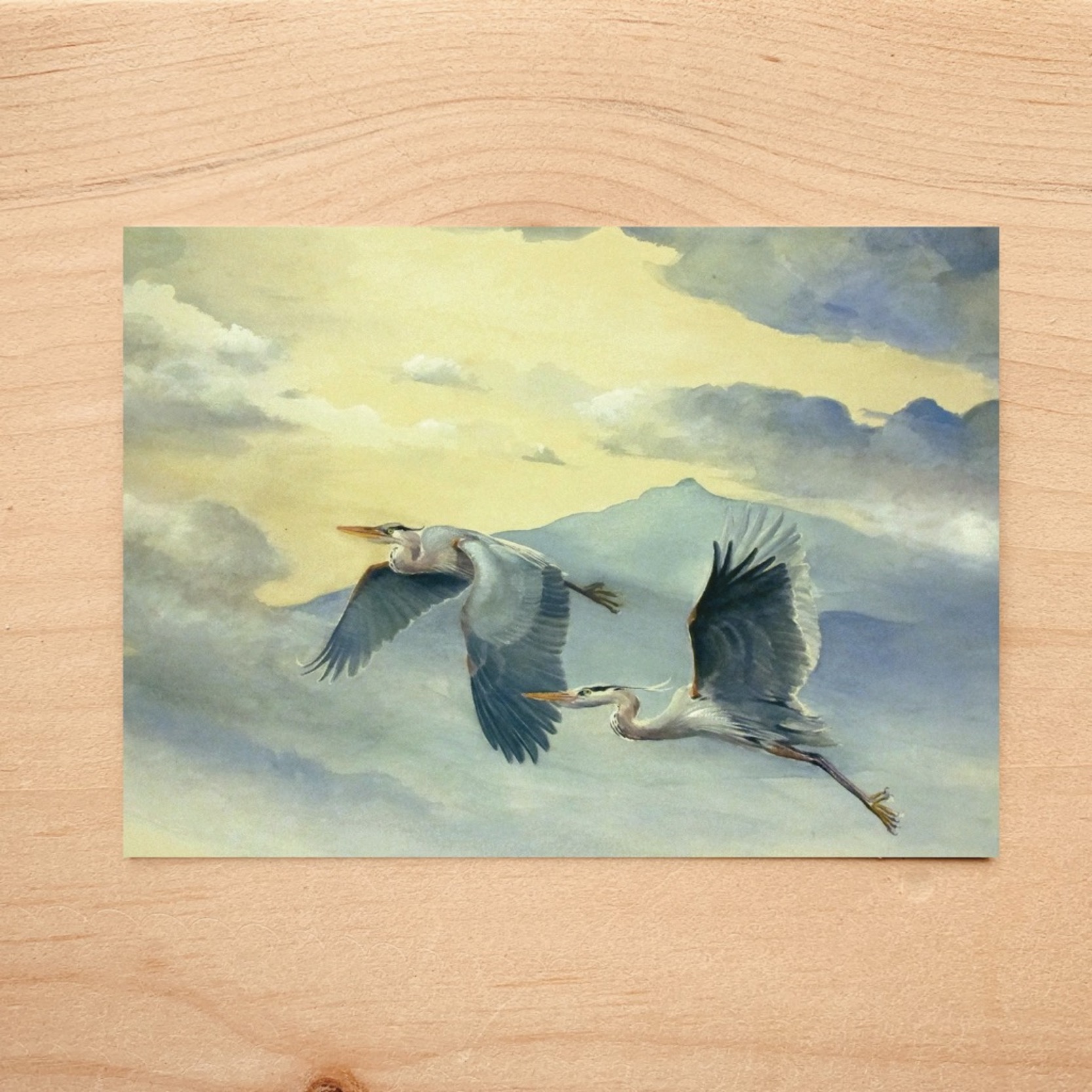
Flying Great Blue Herons Notecard
Great Blue Herons These majestic birds are at home in small streams, marshes, or the shores of ponds, lakes or ocean bays. Great Blue Herons are large (4 feet tall, 6-foot wingspan), common birds that nest across North America from Alaska to Mexico. Great Blues mate for life. Nests are usually made in colonies called…
-

·
Milky Cap Mushrooms Notecard
Milky Cap Mushrooms (Lactarius spp.) Within the family Russelaceae, the genus Lactarius is named for the milk-like substance that is exuded from the cap when injured. There are a couple hundred species included in this genus. They are a very diverse group; some species will gush copious amounts of “milk” when you slice them…
-
·
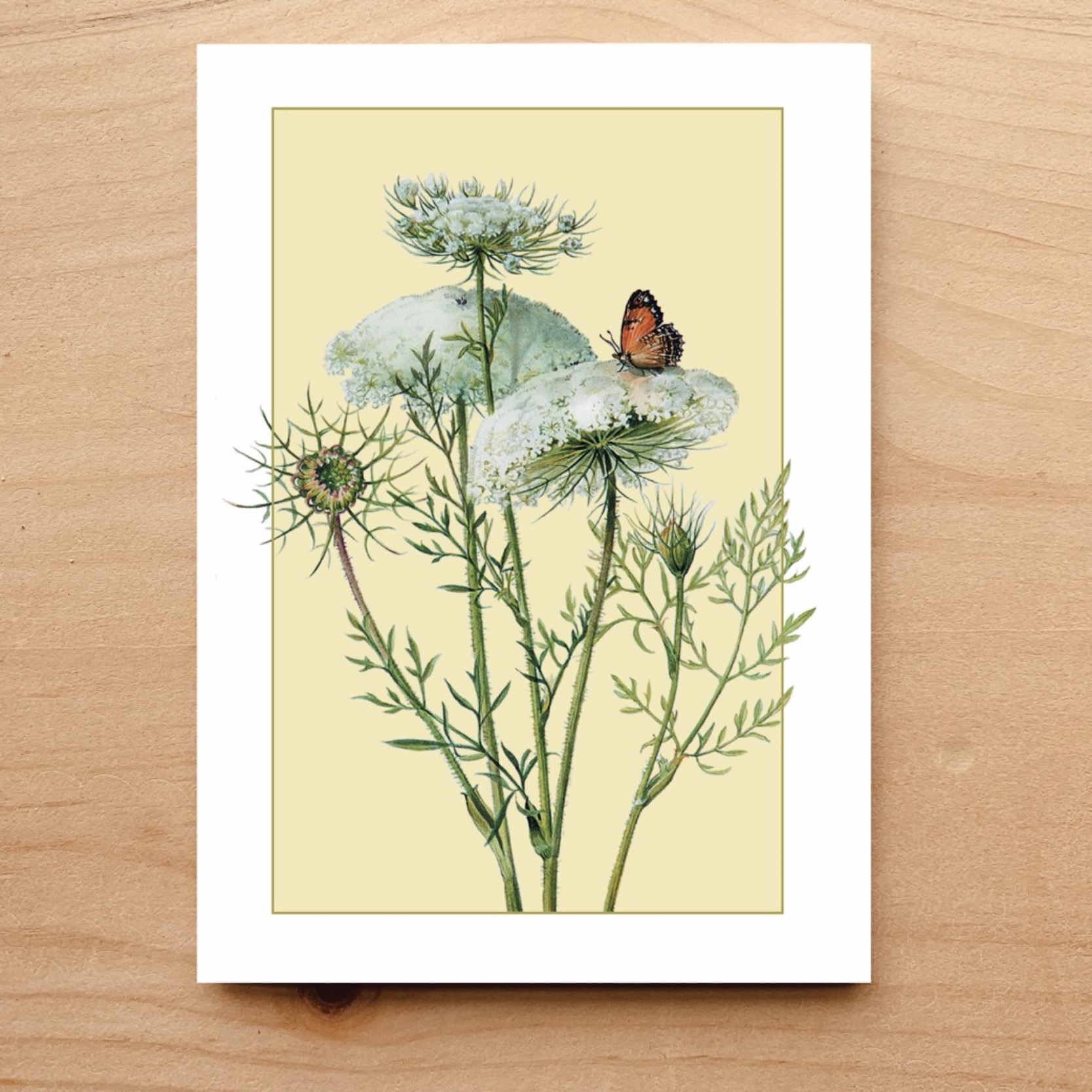
Queen Anne’s Lace Notecard
Queen Anne’s Lace (Daucus carota) Queen Anne’s Lace is the wild stock from which our familiar carrot is derived. Although native to the Old World, these white lacy umbels are a familiar sight throughout North America. This plant is a biennial which grows in its second year from a taproot to a height of 2-4…
-
·
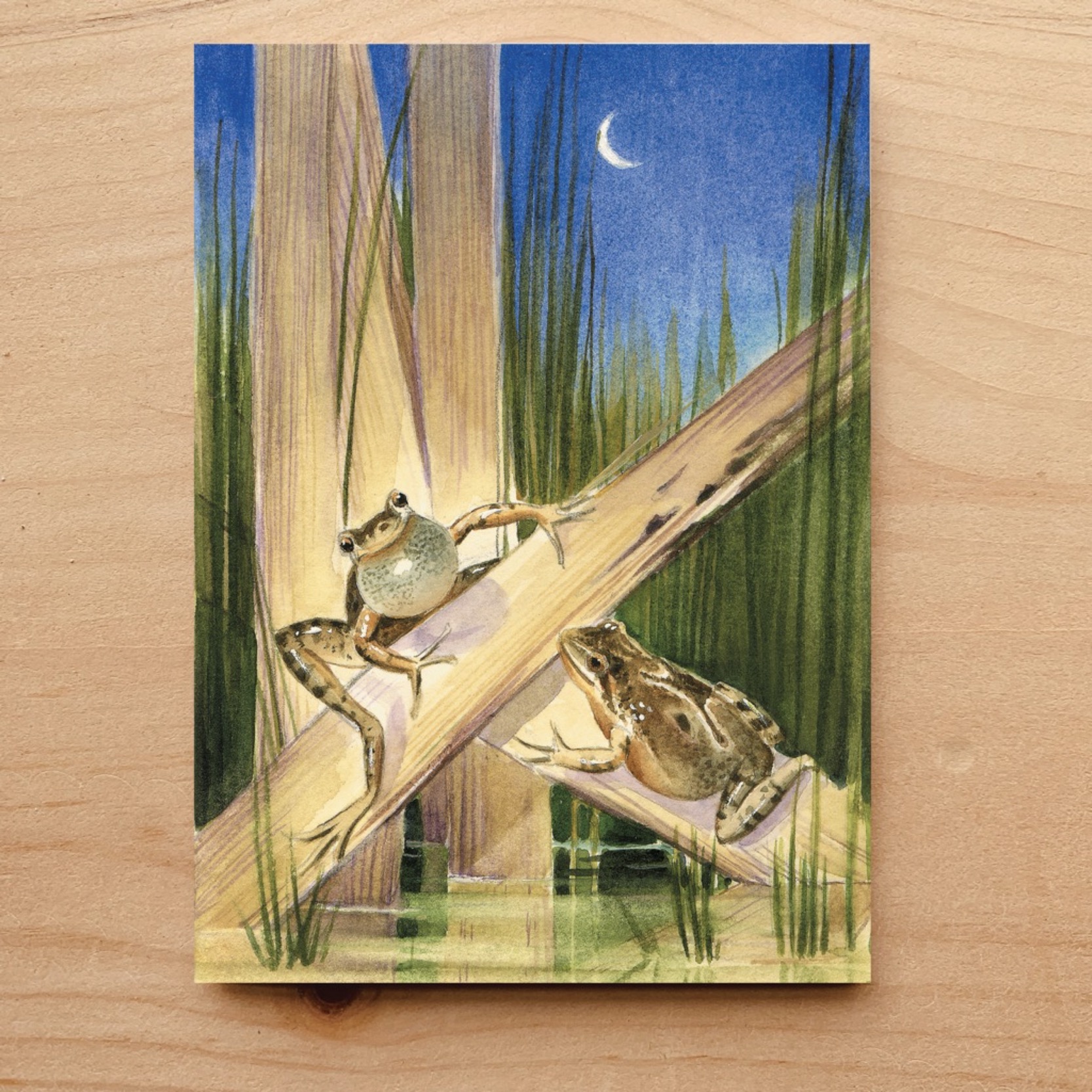
Spring Peepers Notecard
The Spring Peeper is a widespread and familiar species of frog, known primarily for its loud and piercing call, a repeated peep! peep! peep! given by males from ponds and pools during the spring breeding season. Distant choruses sound like magical sleigh bells, but at close range the same calls hurt one’s ears. Although producing…
-

·
Summertime Cows Notecard
What Cows Can Teach Us Cloven hoofed, often spotted, cows are watchful, with tough tongues and blunt teeth perfectly suited to tearing plants off close to the ground. They are ruminants, able to swallow mouthfuls of vegetation whole, chewing it later, in a quiet moment, when it comes up again. Their stomachs have 4 compartments,…
-
·
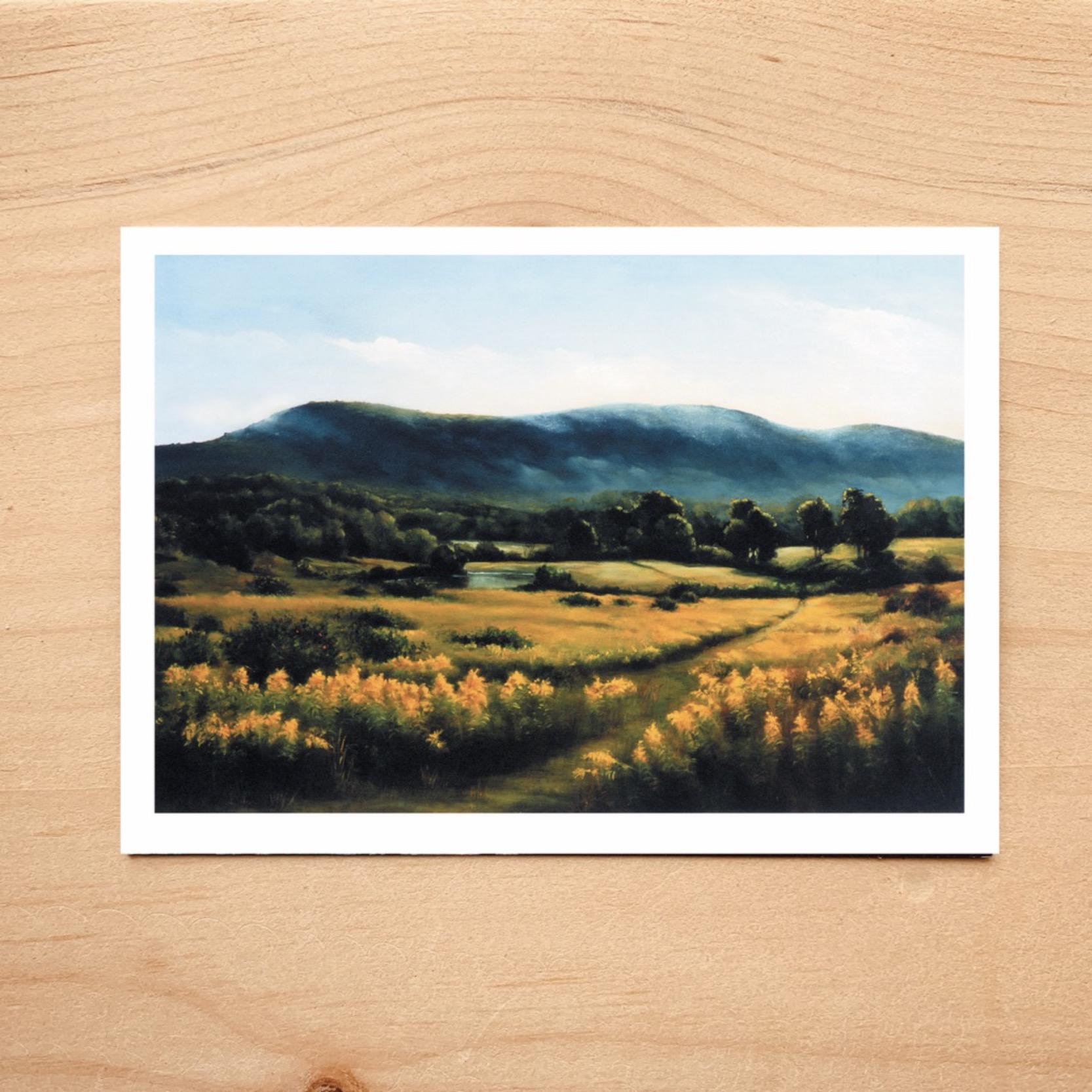
Wild Places Notecard
Wild Places Each of us at some time in our lives needs to behold a wild, unspoiled place large enough that our imaginations may wander and soar freely like a hawk just released from its tether. Like gazing at the stars above, we need wild places vast and not yet fully understood so we may…
-
·
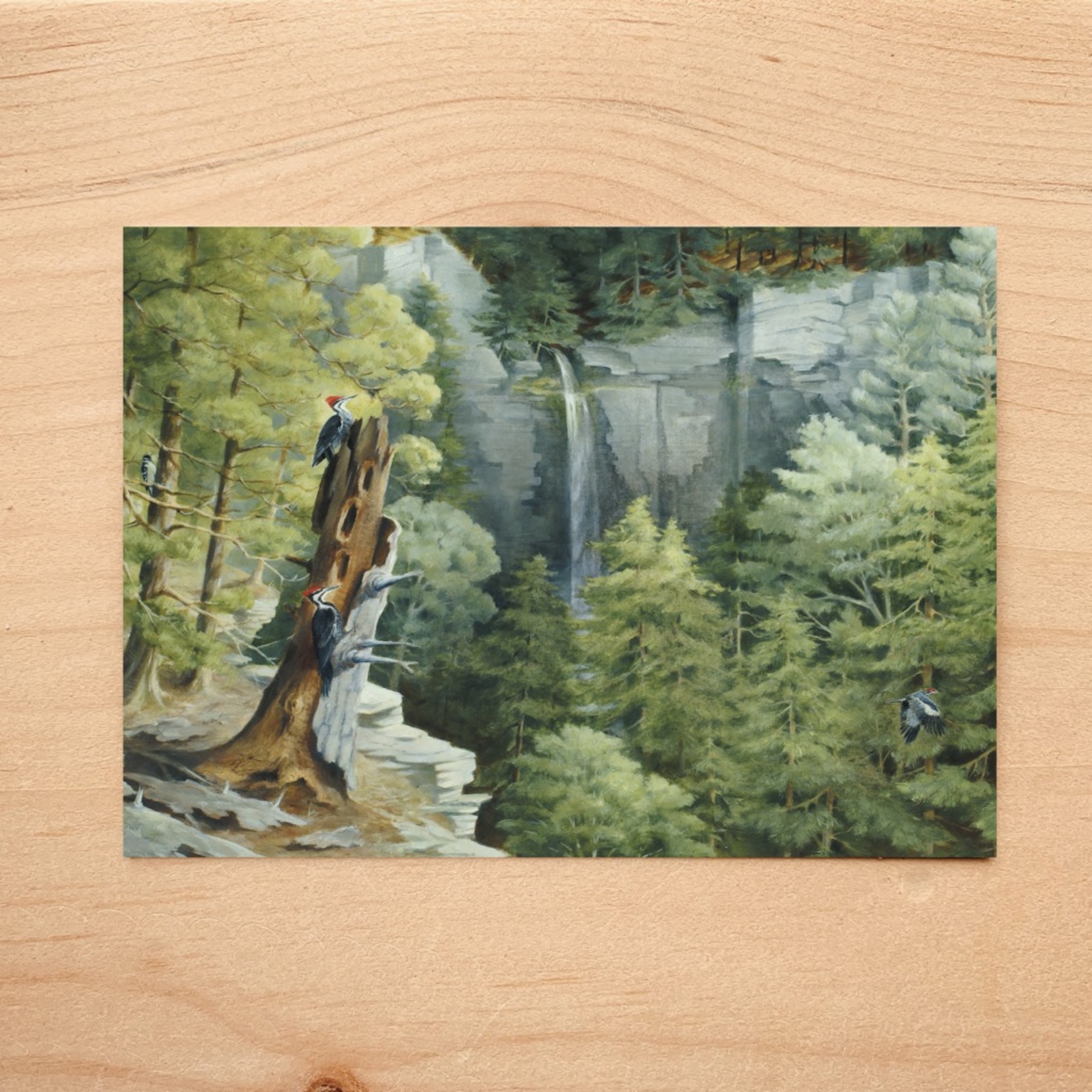
Wild Waterfall Notecard
Wild Waterfall What is it about falling water that captivates us? We build parks around waterfalls. Couples get married at them. But waterfalls deep in the woods are appreciated more by woodpeckers and ravens than by people. Perhaps the beauty of a hidden waterfall resonates with secret beauty in our hearts. Water falls at its…
-
·
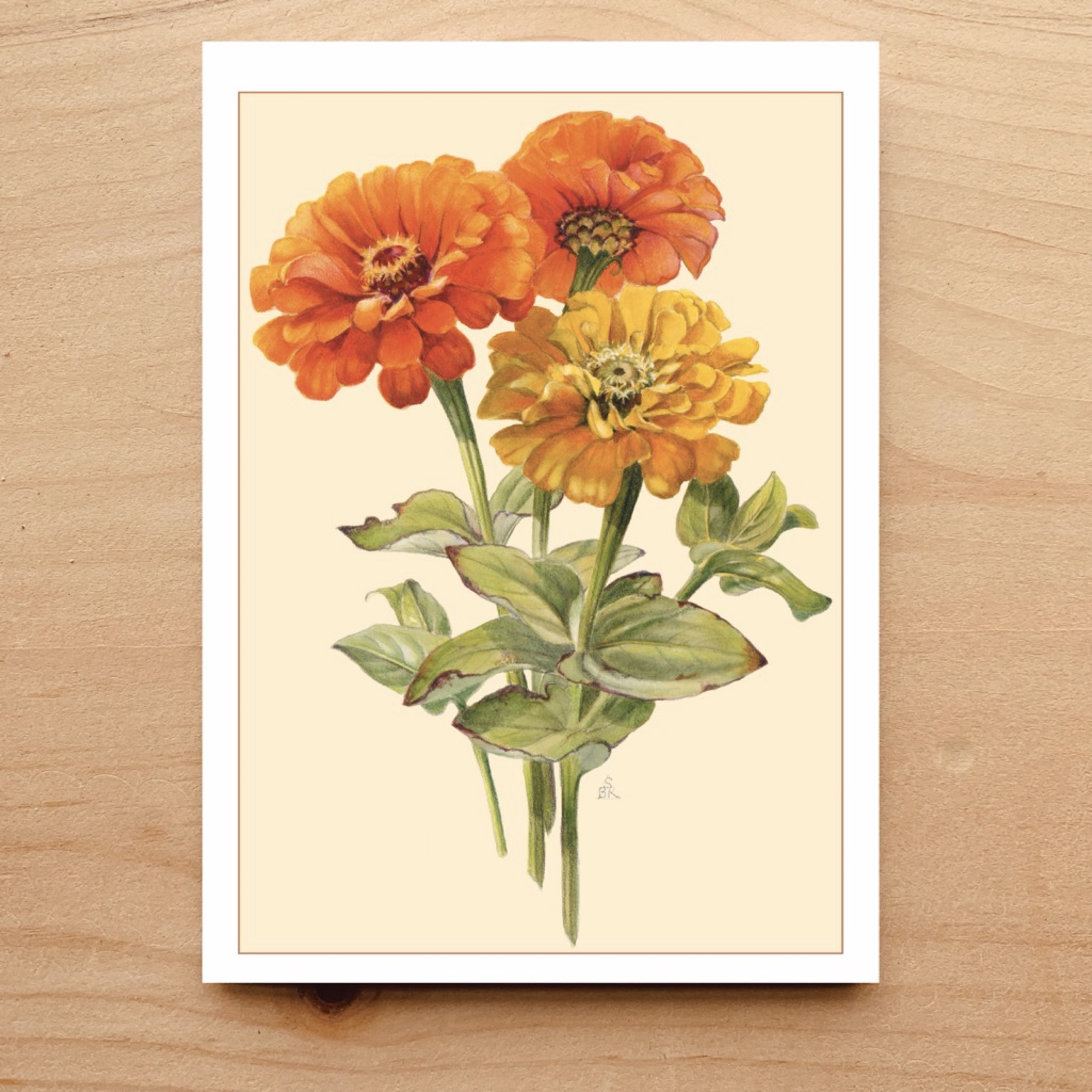
Zinnias Notecard
Zinnias Zinnias are bright annual flowers which are extremely easy to grow and will perk up any garden site with their colorful presence. Preferring hot, dry climates, they will also thrive in cooler, wetter regions. There are many varieties of zinnias, and they are available in all bright colors except for true blue. They also…

Artist: Susan Bull Riley
Whether I am using oils or watercolor, fidelity to the natural world is a constant in all my work. My affection for representing birds and flowers in particular has led to collaborations with institutions where accuracy is valued as highly as beauty; I have paintings in the permanent collections of the New York State Museum and the Cornell Laboratory of Ornithology as well as private collections across the country and beyond. I have contributed nine paintings to the 2008 Breeding Birds of New York Atlas, which is being promoted in fine art circles as well as scientific ones, and several of my botanical watercolors can be found in a newly published anthology of the American Chestnut entitled “Mighty Giants.”
My training in art has been on my own, seeking out the wisdom of the painters I admire, whether or not they are still living. My academic training was in music, with an undergraduate degree from Dartmouth College and a masters in Baroque Flute performance from the New England Conservatory of Music. It’s hardly surprising that the music I am most inclined to play draws from both traditional and classical sources, much like the art I most admire.
A note about how these paintings were made: My paintings of flowers and other plants are done strictly from life. Their transience means that I am pressed to work with as few interruptions as possible until the painting is finished–depending on the complexity of the composition, between one day and weeks. All of the flower paintings are executed with close attention to accuracy, and in the case of the watercolors, are done in the tradition of botanical art that goes back hundreds of years and recalls a a time before photography when careful observation and artful representation of plants merged to create an art form that is enjoying a renaissance today.
The landscapes you see here are always begun outside, where I experience my happiest moments as an artist, but completed at leisure in the quiet of my studio.
To see more of Susan’s work, please check her website: www.susanbullriley.com