-
·
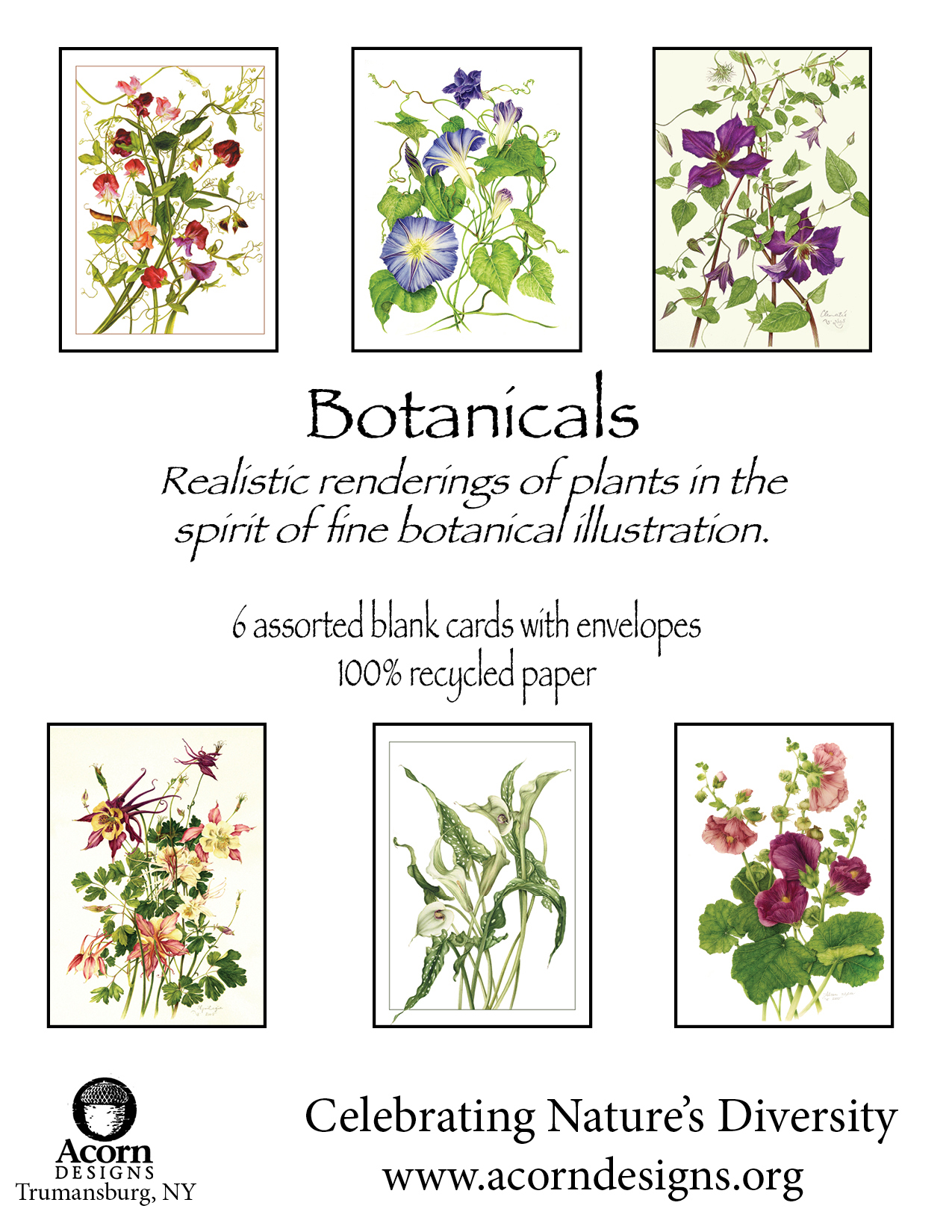
Botanicals Assortment
This notecard assortment features the botanical illustrations of familiar flowers. Each of our 6 cards is blank on the inside for your personal messages, while the back features an educational and informative story about flowers that compliments the artwork on the front. Set includes one each of Columbine, Calla Lily, Sweet Peas, Morning Glory, Clematis,…
-
·
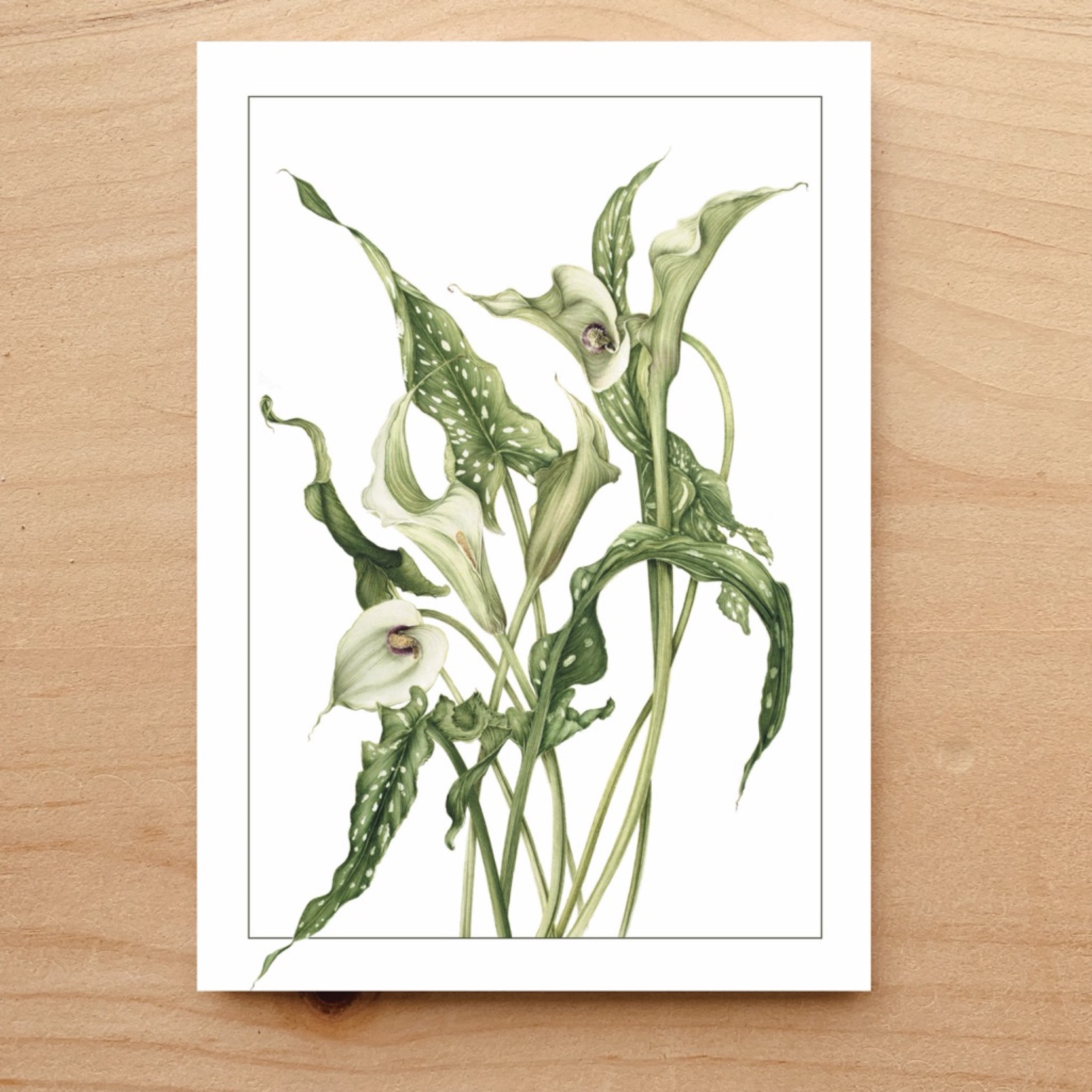
Calla Lily Notecard
Calla Lily (Zantedeschia aethiopica) Oddly enough, the calla is not a member of the lily family. Its common relatives are philodendron and jack-in-the-pulpit. This plant is known by several names; arum lily, crowborough, green goddess lily, green spathe, varkblom, and most commonly as calla lily. Arum lilies are native to the Transvaal region in South…
-
·
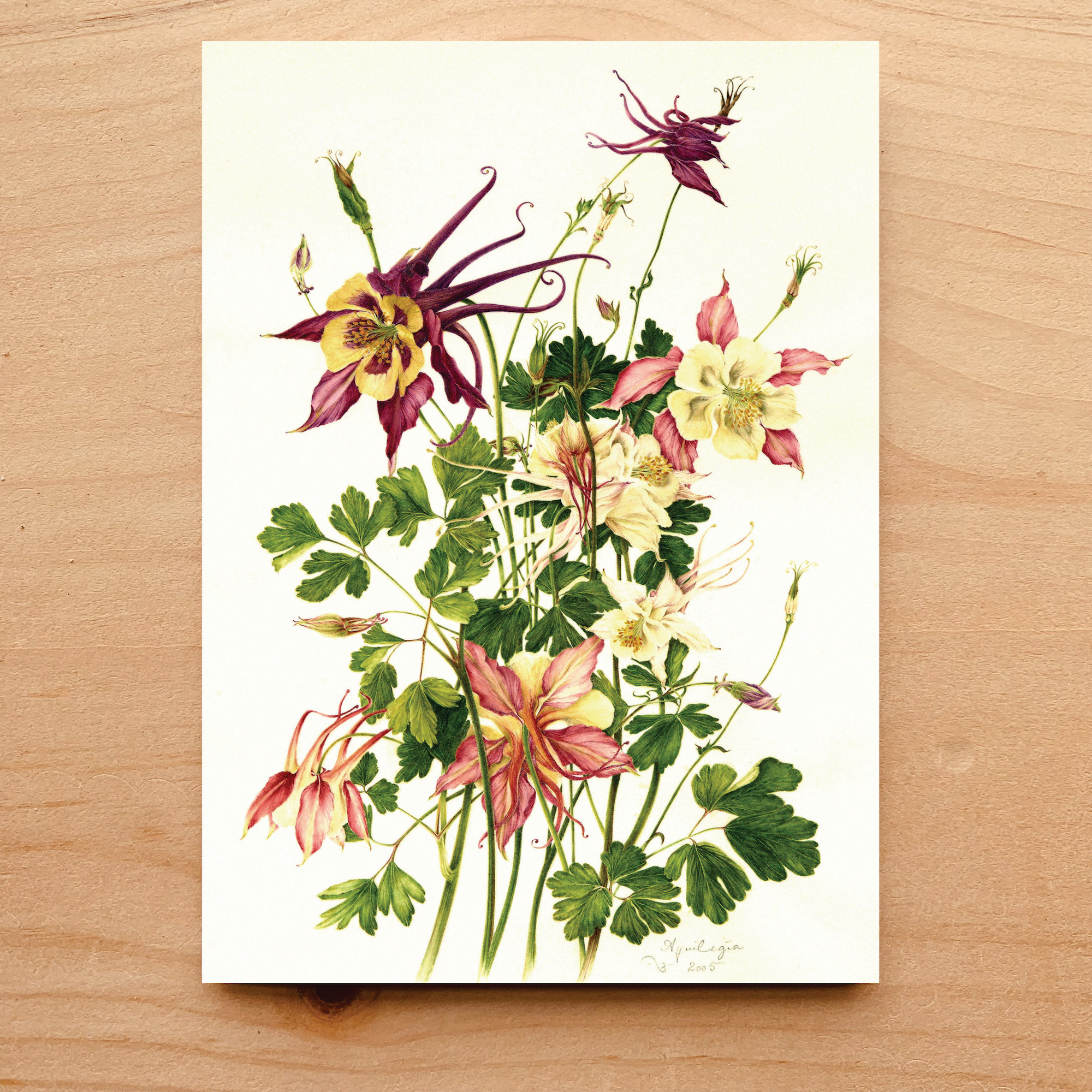
Columbine Notecard
Columbine (Aguilegia) Various explanations exist for the Latin name of the columbine. Aguilegia is the Latin word for eagle. The distinctive spurs of the flower are reminiscent of an eagle’s talons; the elongated petals, shaped like a goblet, resemble water collectors; they also suggest five doves encircling a water fountain. Clearly, to an attentive observer…
-
·
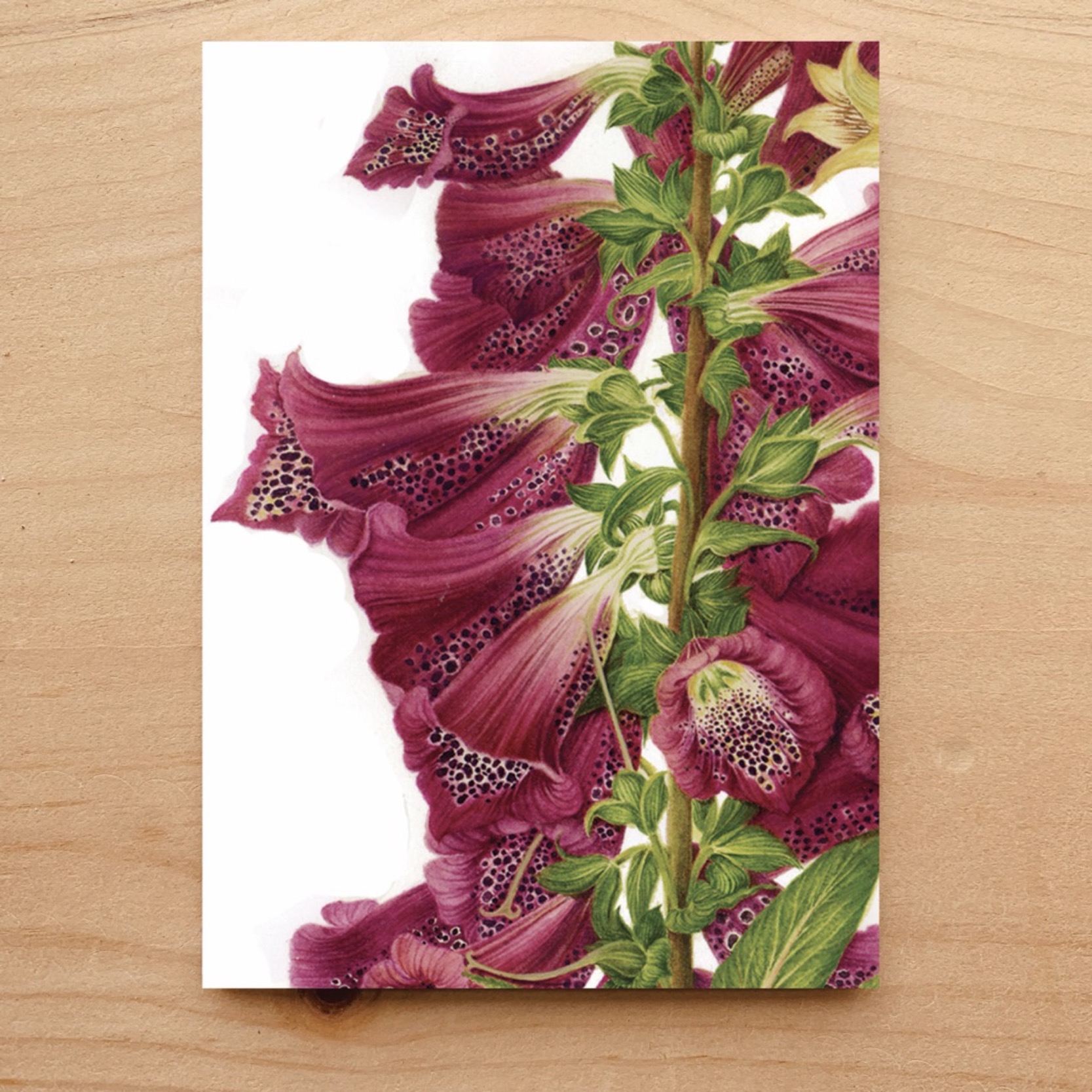
Foxgloves Notecard
Foxgloves (Digitalis purpurea & D. lutea) The plant takes its name from digitus, the Latin word for finger. The common English name, foxglove, may refer to woodland folk’s or faeries’ glove. In Germany, the plant was called fingerhut or thimble; in Ireland Dead Man’s Thimbles because speckles on the Foxglove were thought to be a…
-

·
Garlic Notecard
Garlic (Allium sativum) Garlic is the strongest-flavored member of the onion family. The enzyme allicin, which is the source of both odor as well as therapeutic effect/value, is released only when garlic cloves are crushed or cut. The garlic plant has a long folk history. From early times it was believed to ward off diseases…
-
·
Morning Glory Notecard
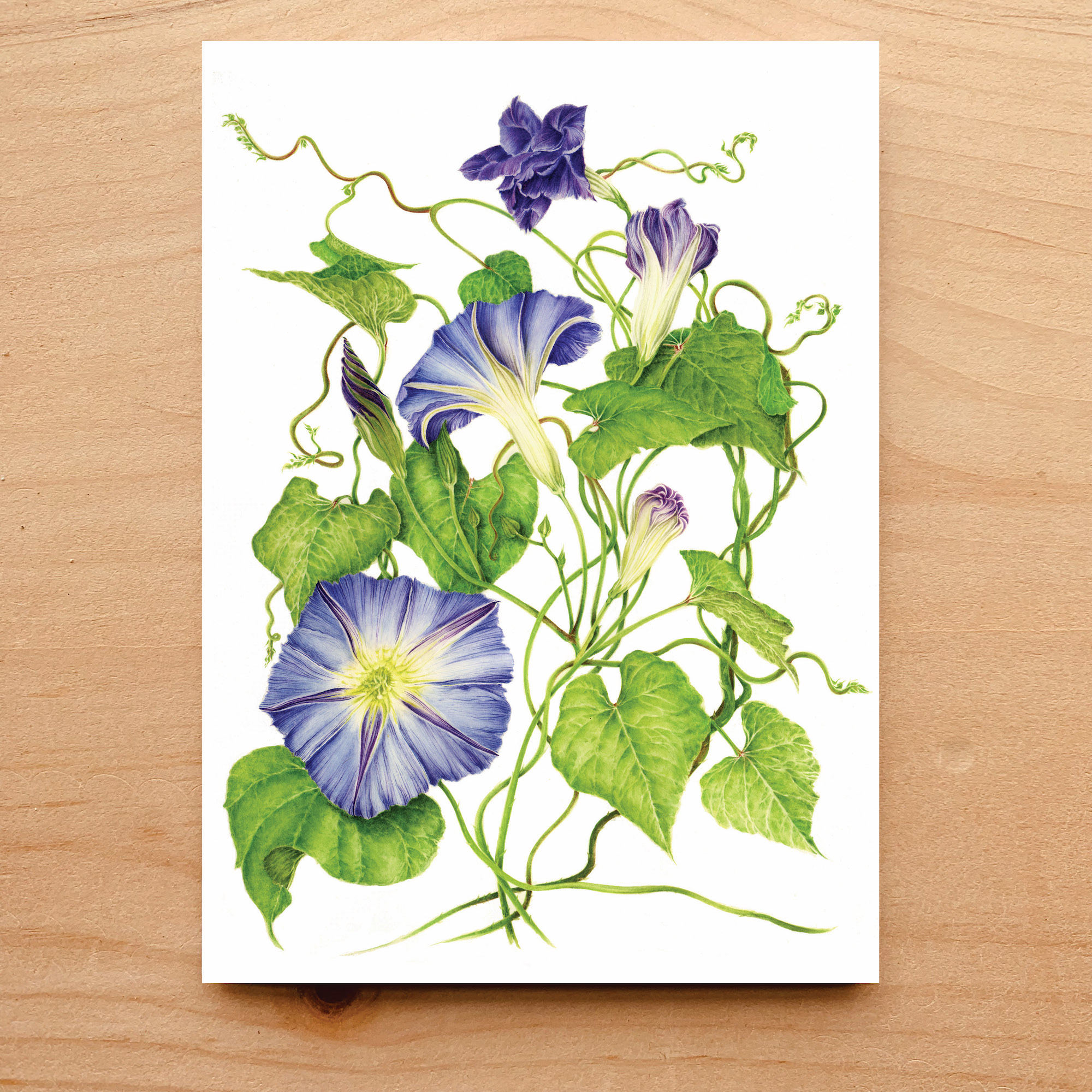
Morning Glory (Ipomoae purpurea) Ips is the Greek word for worms. Ipomoea, or worm-like, describes the twining growth habit of this genus. Only in the twentieth century did the Morning Glory earn its current name. Because the flowers open at night, or in diffuse light, and last only a single day, saluting the sun, the…
-
·
Two-and-a-Half Apples Notecard
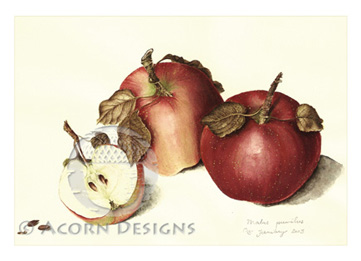
Two-and-a-Half Apples (Malus pumilus) Atalanta, the warrior huntress of Greek mythology, was the swiftest mortal of her time. When her father insisted upon her taking a husband she was distraught because she had been warned by the Delphic oracle against marriage. So she laid a condition. Any suitor must win her in a footrace or…

Artist: Milly Acharya
The Painter
Milly Acharya has lived in Ithaca for over 20 years. She is inspired by local flora as well as tropical plants of India where she grew up. She has always painted, from earliest childhood, mostly for pleasure, until more recently. She is the author and illustrator of 2 children’s books: The Ramayana and Dragon Parade. Her Lathyrus odoratus (Sweetpea) received the award for best painting in the 8th New York annual exhibit of the Horticultural Society and American Society of Botanical Artists; Tropaeolum majus (Nasturtium) received the Jury’s Award for Excellence at the Houston Museum of Natural Science in March 2007; Kniphofia uvaria won the Best of Show Award at the 2008 HSNY/ASBA exhibition. Her portfolio is available at www.botanix.org. Stated below is her approach to the work she loves:
Statement
Picture this: a blank sheet of white paper and a robust, living plant beside it. I examine the specimen carefully from all angles, observing the many details and characteristics that give this plant its unique identity. Then I determine which aspect of the portrait will include the most pertinent features of my subject and provide the viewer with significant information.
With a brush dipped in clear water I approach the blank paper and indicate the direction of the plant’s growth. Very gradually I introduce the first traces of color, faint at first, building up incrementally to intensities that I observe in the specimen.
I entrust the inherent grace of the botanical subject to communicate its own aesthetic power and its natural design to compose my work. It is in order to preserve the vitality and immediacy of the ever-mutatable living plant, that I start directly with paint on paper, without preliminary sketches or drawing. While apples and pears may retain their form from one day to the next, poppies, morning glory, hibiscus, datura and other plants are in constant and rapid motion, so any sketch would be obsolete before the task of painting began.
Accurate documentation of the plant specimen is my aim, so the challenge for me is to saturate the image with detail pertinent to every phase of botanical development—buds and seedpods, stems and roots, leaves and bracts—since every feature counts as equally important in the final portrait. Working exclusively with live specimens, allows me to investigate form, structure, texture and distinctive characteristics in order to tell their story. With the aid of magnifying lenses I peek and probe and discover many a hidden secret concealed beneath the surface. I detect worlds within worlds and the journey within is always an adventure—entrancing, delightful, endlessly fascinating.
Where the brush, the hand & the eye meet the plant & honor its brief moment of glory, that is where the painting happens and when my own pleasure communicates itself to you, the viewer, then the plant form is truly celebrated!